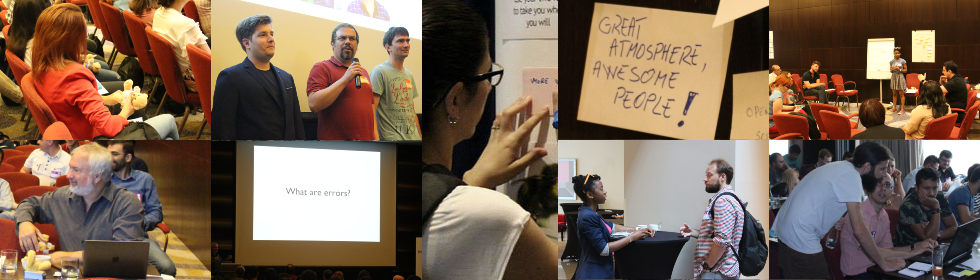
Enjoy the following series of interviews with the speakers, top-notch software crafters from across Europe, joining I T.A.K.E Unconference, Bucharest, 19-20 May. Discover the lessons learned and what drives them to challenge the known path in their field.
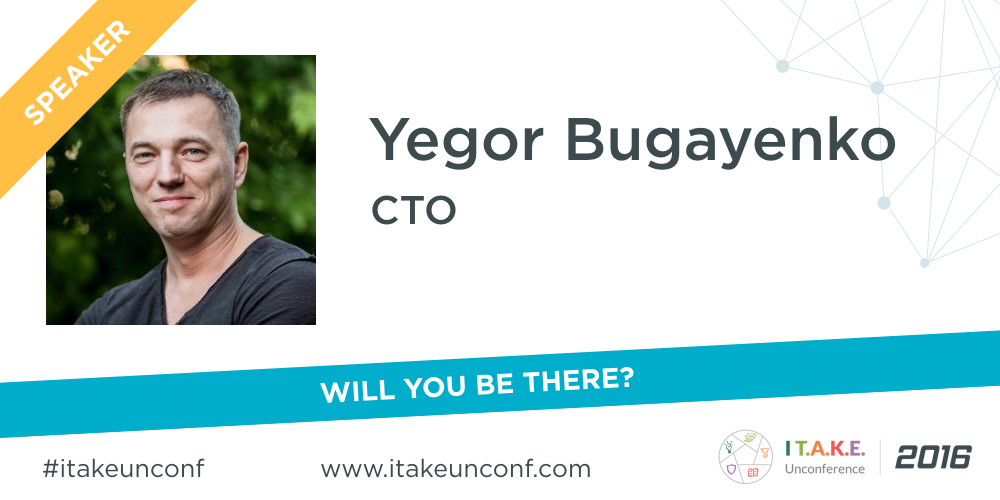
Yegor Bugayenko, CTO and co-founder Teamed.io, will share in his talk about how chat bots are a more effective way of interaction between web (micro-)services and users than traditional HTML user interfaces.
#1. SHARE TOP 3 THINGS YOU DID THAT HELPED YOU GROW & BECOME THE PROFESSIONAL YOU ARE TODAY
#2. What challenges will the participants find solutions to during your session at I T.A.K.E Unconference 2016?
# 3. What else would you like to share with participants at I T.A.K.E Unconference 2016?

Want to join Yegor and many more software crafters from around Europe?
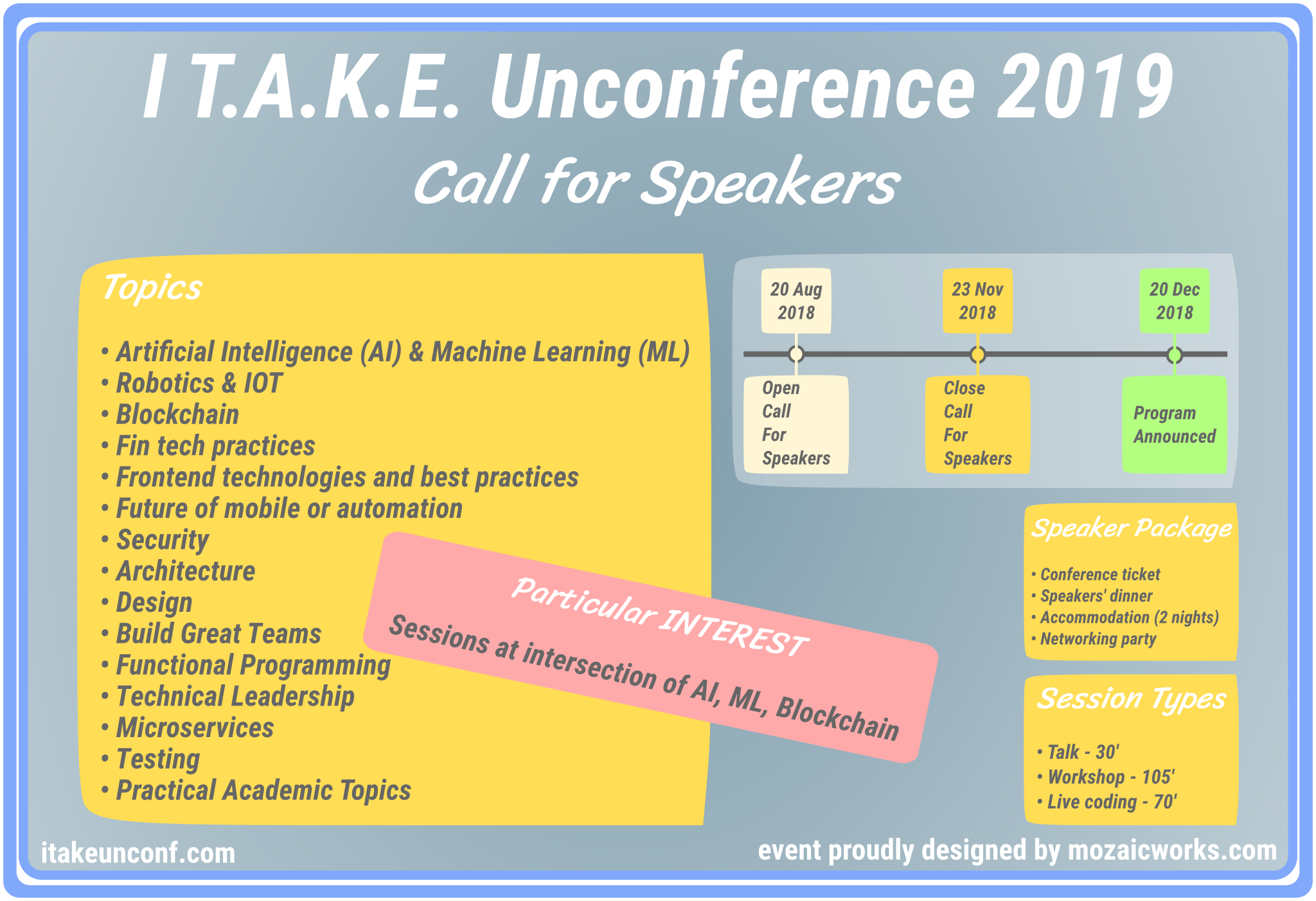
Call for Speakers Opened
Send your proposal to become a speaker at I T.A.K.E. Unconference 2019. This year we are interested in specific topics, and choosing one of them might get you closer to becoming a speaker.
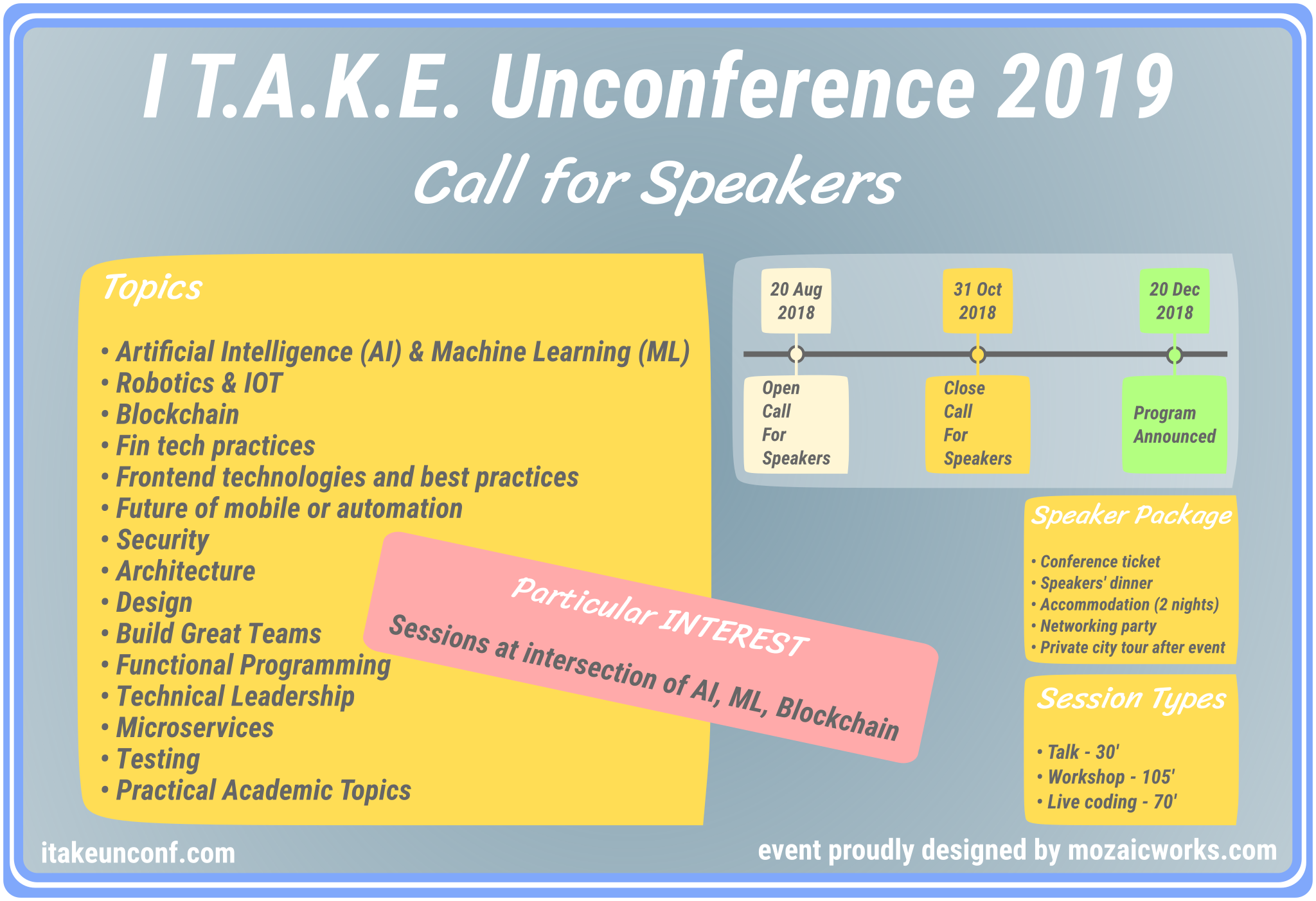
To increase your chances to become accepted, here are some tips:
#1. Get into the attendees shoes
If you have a very clear idea of who your audience is going to be, make the exercise to think from their point of view. They choose to attend your session, and they expect the best value from their investment.
#2. Customize, customize, customize
Every audience is unique, so craft your proposal according to what you know about your audience and about the event. Try to bring an original approach for each session you submit.
#3. Pay attention to details
When you apply, make sure you have an excellent title, a clear description of what you want to present and a strong personal bio.
#4. Invest time in your application
Although it might seem at hand, making a proposal takes time. Make sure you follow the guidelines offered by the organizers and when in doubt, ask for more details. Make sure you offer the details requested in the application.
#5. And a little extra thing
You’ve seen the call, you got your information in order and you are pretty sure you want to make a submission.
You can read more in detail about our tips here.
Have any questions about the call for papers or the Unconference? Let us know in the comments.
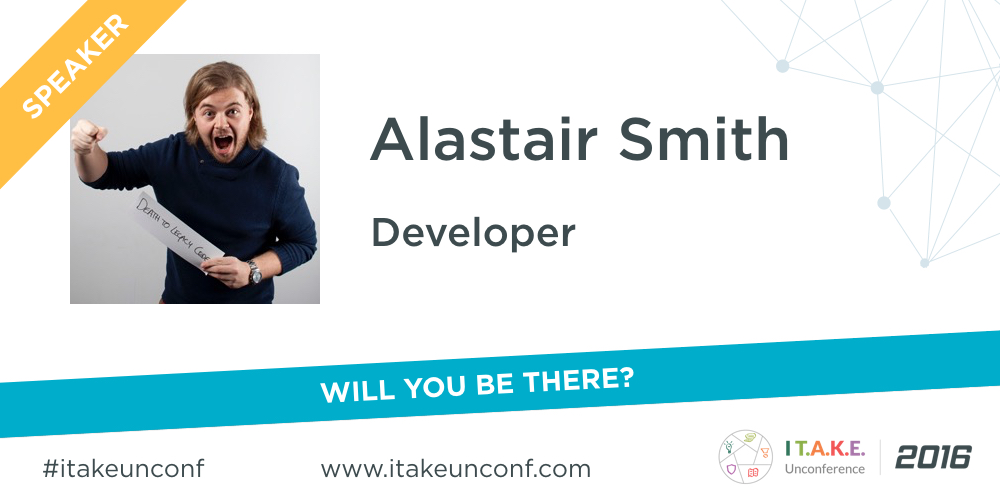
Test-Drive your Database & the 4 Rules of Simple Design
#1. SHARE TOP 5 THINGS YOU DID THAT HELPED YOU GROW & BECOME THE PROFESSIONAL YOU ARE TODAY
- Reading software development books hungrily in the first few years of my career. Texts such as Code Complete and especially The Pragmatic Programmer and Test-Driven Development by Example were hugely influential on my early career and the direction I chose to take. The Pragmatic Programmer in particular is worth re-reading: I didn’t fully understand some parts of it as a fresh graduate joining the industry, and the experience I’ve built up over the last ten years has allowed me to get more from it on each later reading.
- Attending developer meetups, user groups, and conferences. Aside from the knowledge gained from the talks and workshops run at these events, they’re an invaluable opportunity to meet other developers, learn from their experiences, and about the local software industry.
- Finding a good mentor. As it turned out, my mentoring was very unofficial: a former colleague of mine guided me in the ways of professional software development, and pointed me in the direction of books, blogs, and other resources to learn from. His advice was invaluable in helping me discover techniques for writing good tests (and why tests are important), the importance of refactoring, and the foundational principles of Object-Oriented Design, such as SOLID. All of this at the beginning of my career, in an environment where I wouldn’t have otherwise been exposed to such topics.
- Understanding people as well as tech. As technical people, we can often be quite blinded to the problems around us and focus on the tools and technologies rather than the underlying collaborations with other people.
- Applying principles I’d learned elsewhere to my profession. I play a lot of music, and have been for over 20 years; as such, the idea of deliberate practice is quite a familiar one to me, and applying this principle to the techniques used in software development made a lot of sense. Participating in and organising things like Dojos and Code Retreats has helped me understand and improve my own development process enormously.
#2. WHAT CHALLENGES WILL THE PARTICIPANTS FIND SOLUTIONS TO DURING YOUR SESSIONS @ I T.A.K.E UNCONFERENCE 2016?
#3. WHAT ELSE WOULD YOU LIKE TO SHARE WITH PARTICIPANTS?
Want to join Alastair and many more software crafters from around Europe?
Remote pair programming
Enjoy the following series of interviews with the speakers, top-notch software crafters from across Europe, joining I T.A.K.E Unconference, Bucharest, 11-12 May. Discover the lessons learned and what drives them to challenge the known path in their field.
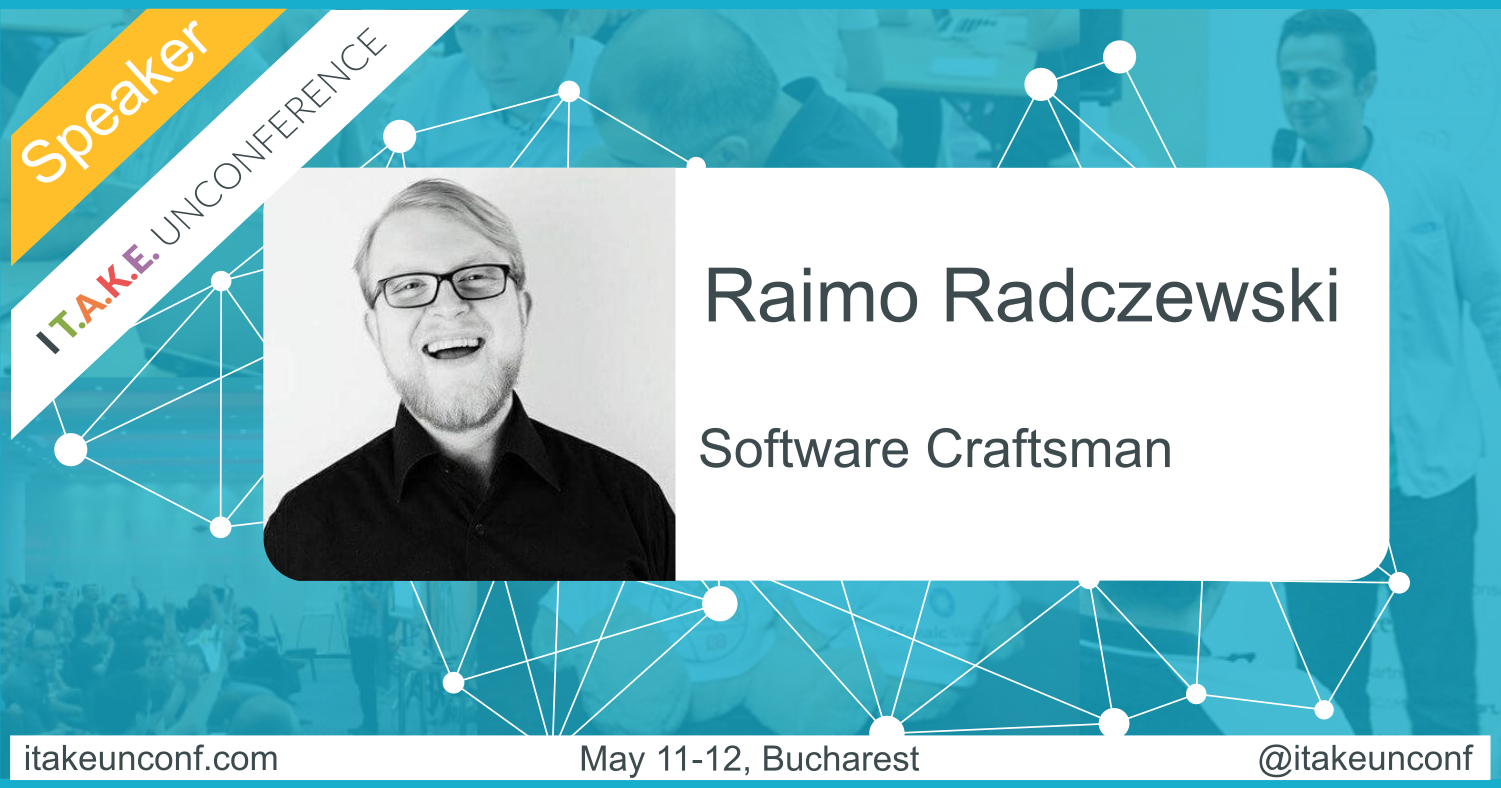
Raimo Radczewski is a freelancing software craftsman living in Berlin, Germany. He’s organizing Berlin’s Software Craftsmanship Community where he supports craftspeople with professionalizing and sharpening their skills, but also reflect on their current practices and how they can work better as teams. At #itakeunconf he will be sharing about Remote Pair-programming.
#1. Please share with us 5 things you did that helped you grow and become the professional you are today
I think the most important thing that shaped my career has been the Software Craftsmanship movement. I first went to an OpenSpace in 2012, then Coderetreats, then SoCraTes, then organizing OpenSpaces and such. The community has really supported me and helped me grow in every professional aspect I could think of.
#2. What challenges will the participants find solutions to during your session at I T.A.K.E Unconference 2017?
The most challenging part of working remote is keeping an inter-human connection to the person on the other side to make up for the tools that so rarely work. It also helps to use the least-broken tools and find a structure that works for the individuals that want to pair up.
#3. Recommend for the participants 3 sources you find inspiration from and would help them better understand you
I draw most of my inspiration from visiting and organizing events in the communities. Additionally, the Software Craftsmanship Slack Team is a great place to start discussing with craftspeople all over the world.
Want to join Raimo and ~300 software crafters from around Europe?
Register now for I T.A.K.E Unconference 2017!