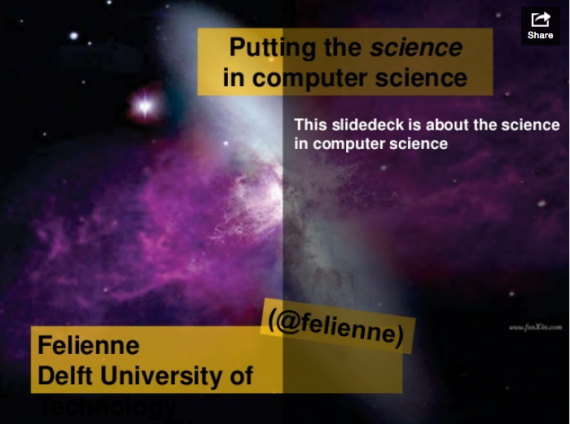
Most conversations about best practices in software development focus on personal preferences: Vim versus emacs, static versus dynamic typing, Java versus C#. Other domains use research to settle such questions. Couldn’t software development benefit from science as well?
Felienne Hermans, assistant professor at Delft University of Technology, had a very engaging talk at I T.A.K.E. Unconference 2014 about experiments designed and run to answer questions such as:
- What is the best programming language?
- Do design patterns help in any way?
- Is Linus’ law correct?
- Are spreadsheets code?
Watch her talk @ I T.A.K.E. Unconference 2014 edition to find out the results.
Check out more about I T.A.K.E. Unconference 2015 or see directly the Schedule.
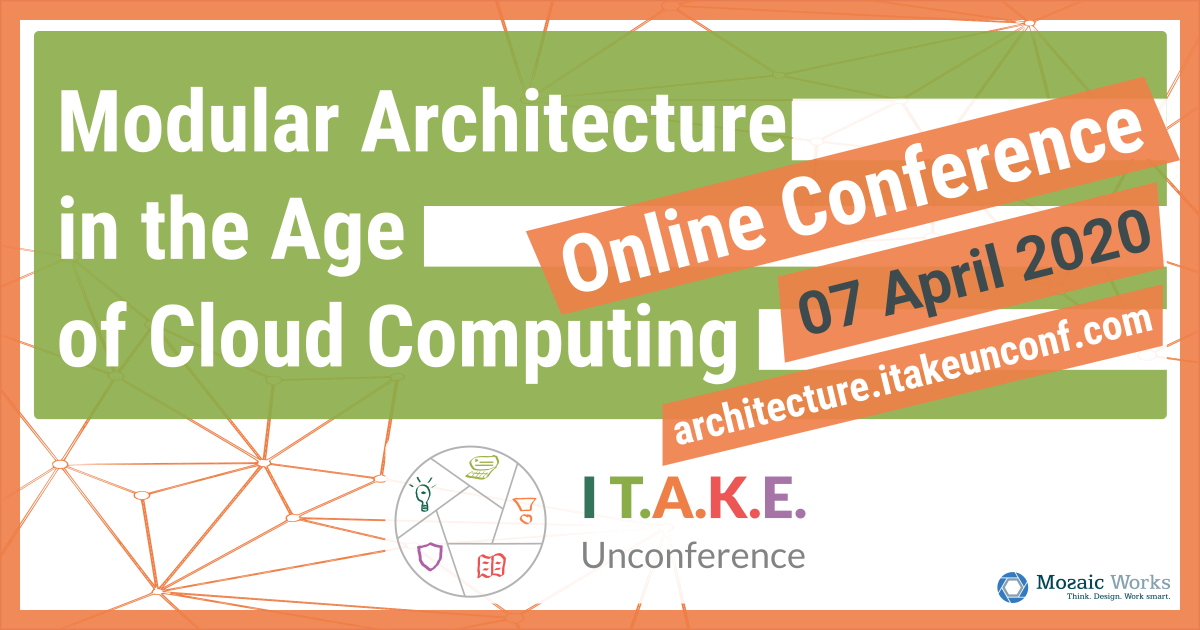
Online 7th edition of I TAKE Unconference
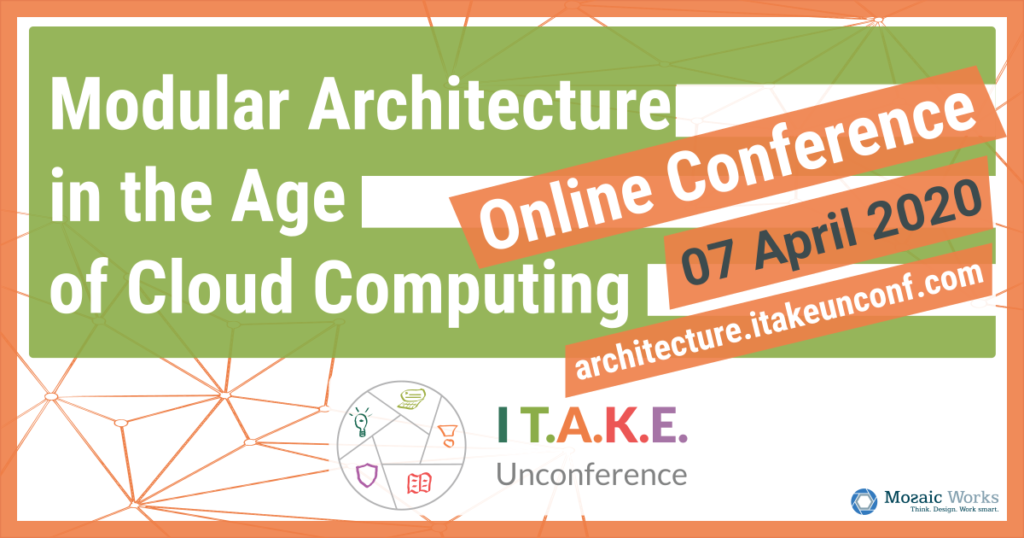
Bringing good news for the tech community: the I T.A.K.E. Unconference comes back with the 7th edition on the 7th of April 2020.
With so many events canceled this Spring, we’ve decided the time came to innovate and change the format once more in order to answer to today’s needs and challenges.
As firm believers in continuous improvement, we plan to overcome the barriers that might restrict learning in this period. How we plan to do that? By going online and bringing you international speakers and top-notch practitioners in the comfort of your own office or home.
How is the 7th edition of I TAKE Unconference special?
- Focus is placed upon new innovative approaches to modular architecture
- Brings together international speakers and top-notch professionals from Europe, the USA and all over the world
- The sessions include practical examples with the latest techniques applied in various environments, programming languages & technologies
- Fast-paced, dynamic learning atmosphere
- Overcoming travel challenges of this Spring
We invite you to discover more on Modular Architecture in the Age of Cloud Computing – this edition’s topic.
Want to be part of this not-to-miss event? You are welcome to join our group of supporters and partners and bring innovation one step further. Just let us know and we can make it happen.
Let’s continue sharing knowledge by preserving the feeling of a community of peers who learn together.
Call for speakers open

We have opened the call for speakers. For next year we decided to keep the topics that you hold dear: architecture, design principles, TDD etc. and also add some new areas that are becoming more and more popular these days: mobile, big data, scaling architecture etc. Visit the page to learn more.
If you know somebody that has something valuable to share with our audience, we’d appreciate it if you shared the link for the call page.
***
Have any questions about the call for papers or the unconference? Let us know in the comments.
[newsletter-form]
Opening the doors of next year’s edition
Work is already well underway for next year’s unconference. Read on to learn more about what happens when, the confirmed keynote, call for speakers and new website.
Timeline for 2014
We’ve created the first iteration of the plan for this year. In case you were wondering, here are the key milestones between now and the end of 2014:
- Sep 03: New website goes live
- Sep 03: Call for papers opened
- Nov 03: Registrations opened
- Nov 10: Program announced
Confirmed keynote
As we announced in May, we already have confirmed one of the keynote speakers for 2015. Simon Brown is a renowned architect and trainer on agile architecture and author of Software Architecture for Developers. With a schedule as busy as his, we’re sure glad it matched our dates for next year’s I T.A.K.E Unconference.
Call for speakers open
We have opened the call for speakers. For next year we decided to keep the topics that you hold dear: architecture, design principles, TDD etc. and also add some new areas that are becoming more and more popular these days: mobile, big data, scaling architecture etc. Visit the page to learn more.
If you know somebody that has something valuable to share with our audience, we’d appreciate it if you shared the link for the call page.
New website
We hope you enjoy the new website we’ve created. Based on your feedback during the past two years, we decided to come up with a new design that is accessible on all mobile devices. We’d like to thank our partners at Gorilla Studio for their effort and creativity with the new design.
We’re really excited for next year’s edition! So far things look great and we are committed to delivering the best edition yet to all our attendees. See you there?
***
Do you like the new website? Have any questions about the call for papers or the unconference? Let us know in the comments.
[newsletter-form]