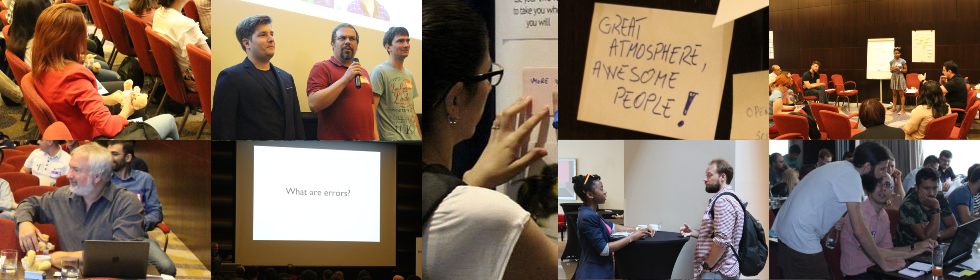
And…it’s a wrap: 2 days of intense & complex program, 300 international participants, more than 35 sessions & more than 35 speakers from United States, Europe and Asia. During the 2nd day of the event, 15 speakers from 10 countries shared their knowledge on Machine Learning, IoT, Evolutionary Design, Documentation for Software Developers, Impact Mapping and more.
Videos are available here. Find below the presentations from day 2. The slides from day 1 are here.
Romeo Kienzler – Realtime- Cognitive IoT using DeepLearning and Online Learning on top of ApacheSpark Streaming and Spark enabled DL frameworks (keynote)
Dan Billing – Testing or Hacking: Real Advice on Effective Security Testing Strategies (keynote)
Eduards Sizovs – Beyond Software Craftsmanship (keynote)
Dan Serban – Introduction to Apache Spark
Jakob Holderbaum – Managing Shared Secrets with basic Unix tools
Florin Coros – Decide between In-Process or Inter-Processes Communication at Deploy Time
Peter Kofler – Brutal Coding Constraints
Joe Wright – Tackling 16 years of legacy code with mob programming and Lego
Alin Pandichi – Covariance and contravariance. Say what?!
Patrick Baumgartner – Impact Mapping Workshop
Liviu – Stefanita Baiu – Journey to Agilandia – a BA Travel Kit
More slides and videos from day 2 coming soon
Documentation for software developers
Enjoy the following series of interviews with the speakers, top-notch software crafters from across Europe, joining I T.A.K.E Unconference, Bucharest, 11-12 May. Discover the lessons learned and what drives them to challenge the known path in their field.
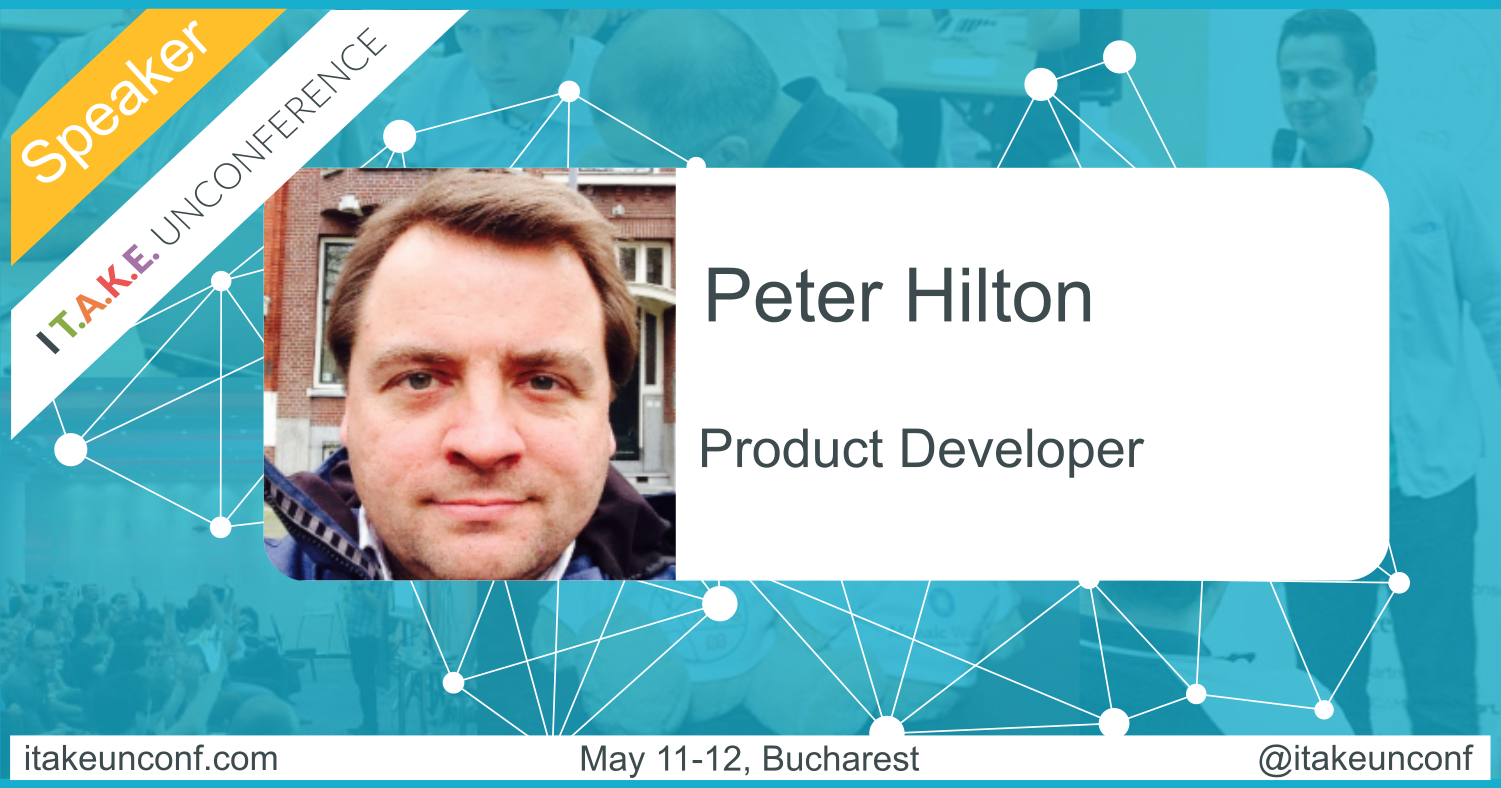
Peter Hilton is a software developer, writer, speaker, trainer, and musician. Peter’s professional interests are business process management, web application development, functional design, agile software development, and documentation. He will present at #itakeunconf a session about documentation for software developers.
#1. Please share with us 5 things you did that helped you grow & become the professional you are today
The things that helped me grow the most were starting to do something that I later developed a lot further: travel, presenting, writing, management, and coding. These influences on my professional development were taking overseas assignments and later moving permanently to another country, presenting to colleagues and later at conferences, writing a tech blog and later a published book, leading a team and later taking on a management role. As for coding, the most important thing was to never-never give it up and always have something new to learn.
#2. What challenges will the participants find solutions to during your session at I T.A.K.E Unconference 2017?
My workshop will help participants address the hardest challenge in software documentation: learning how to take the first step from no documentation at all to the minimum viable documentation. The hard part is understanding what you can do, without wasting time on too much documentation.
#3. Recommend for the participants 3 sources you find inspiration from and would help them better understand you
iMy passion is figuring how to explain software and make it maintainable. I was originally inspired to learn more about this after reading Steve McConnel’s book Code Complete, as well as many other books about software development. I discuss my favourite aspect of making code understandable in my Software Engineering Radio interview on naming things.
I’ve always found talking to other people the best way to develop and refine my own ideas. This inevitably lead to conference presentations, for which my greatest influence is Kevlin Henney’s presentations.
Perhaps my greatest inspiration is the real world, which I enjoy exploring. My favourite way to learn about a new city and immerse myself in it is to explore its cafes, which I started doing on business trips and overseas assignments when I had a hotel room instead of a home to stay in. Writing cafe reviews on my own web site, before the likes of TripAdvisor was invented, was also how I started to explore writing. Today, there’s still probably as much writing about cafes as about programming on my own blog.
Want to join Peter and ~300 software crafters from around Europe?
Register now for I T.A.K.E Unconference 2017!
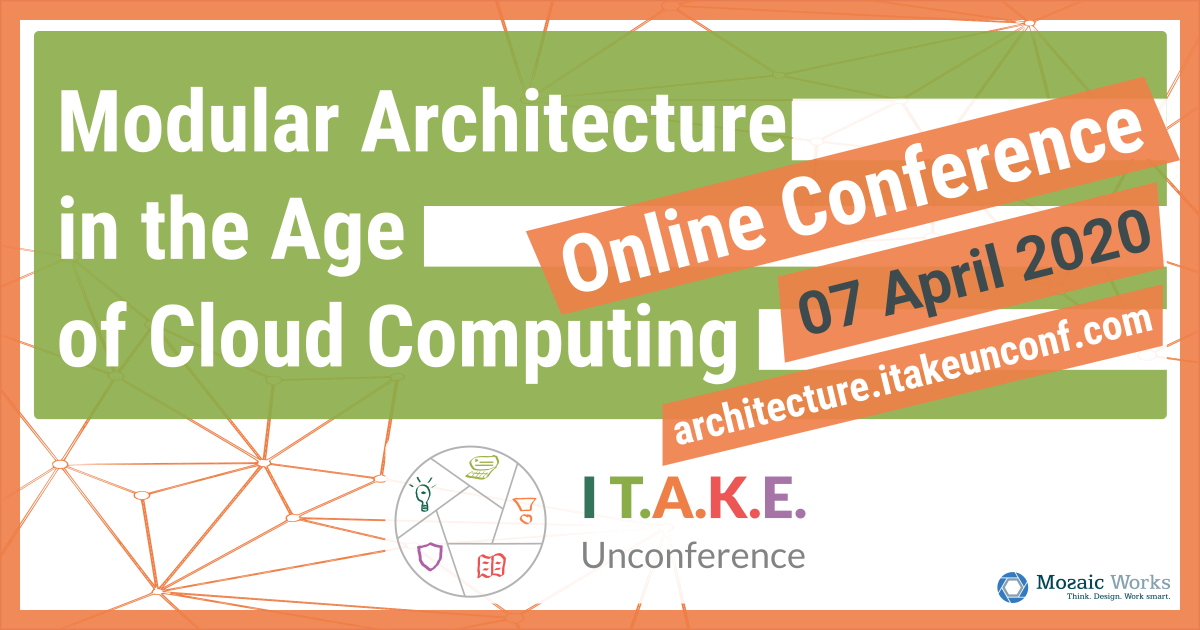
Online 7th edition of I TAKE Unconference
Bringing good news for the tech community: the I T.A.K.E. Unconference comes back with the 7th edition on the 7th of April 2020.
With so many events canceled this Spring, we’ve decided the time came to innovate and change the format once more in order to answer to today’s needs and challenges.
As firm believers in continuous improvement, we plan to overcome the barriers that might restrict learning in this period. How we plan to do that? By going online and bringing you international speakers and top-notch practitioners in the comfort of your own office or home.
How is the 7th edition of I TAKE Unconference special?
- Focus is placed upon new innovative approaches to modular architecture
- Brings together international speakers and top-notch professionals from Europe, the USA and all over the world
- The sessions include practical examples with the latest techniques applied in various environments, programming languages & technologies
- Fast-paced, dynamic learning atmosphere
- Overcoming travel challenges of this Spring
We invite you to discover more on Modular Architecture in the Age of Cloud Computing – this edition’s topic.
Want to be part of this not-to-miss event? You are welcome to join our group of supporters and partners and bring innovation one step further. Just let us know and we can make it happen.
Let’s continue sharing knowledge by preserving the feeling of a community of peers who learn together.
Developers are not computers
Enjoy the following series of interviews with the speakers, top-notch software crafters from across Europe, joining I T.A.K.E Unconference, Bucharest, 11-12 May. Discover the lessons learned and what drives them to challenge the known path in their field.
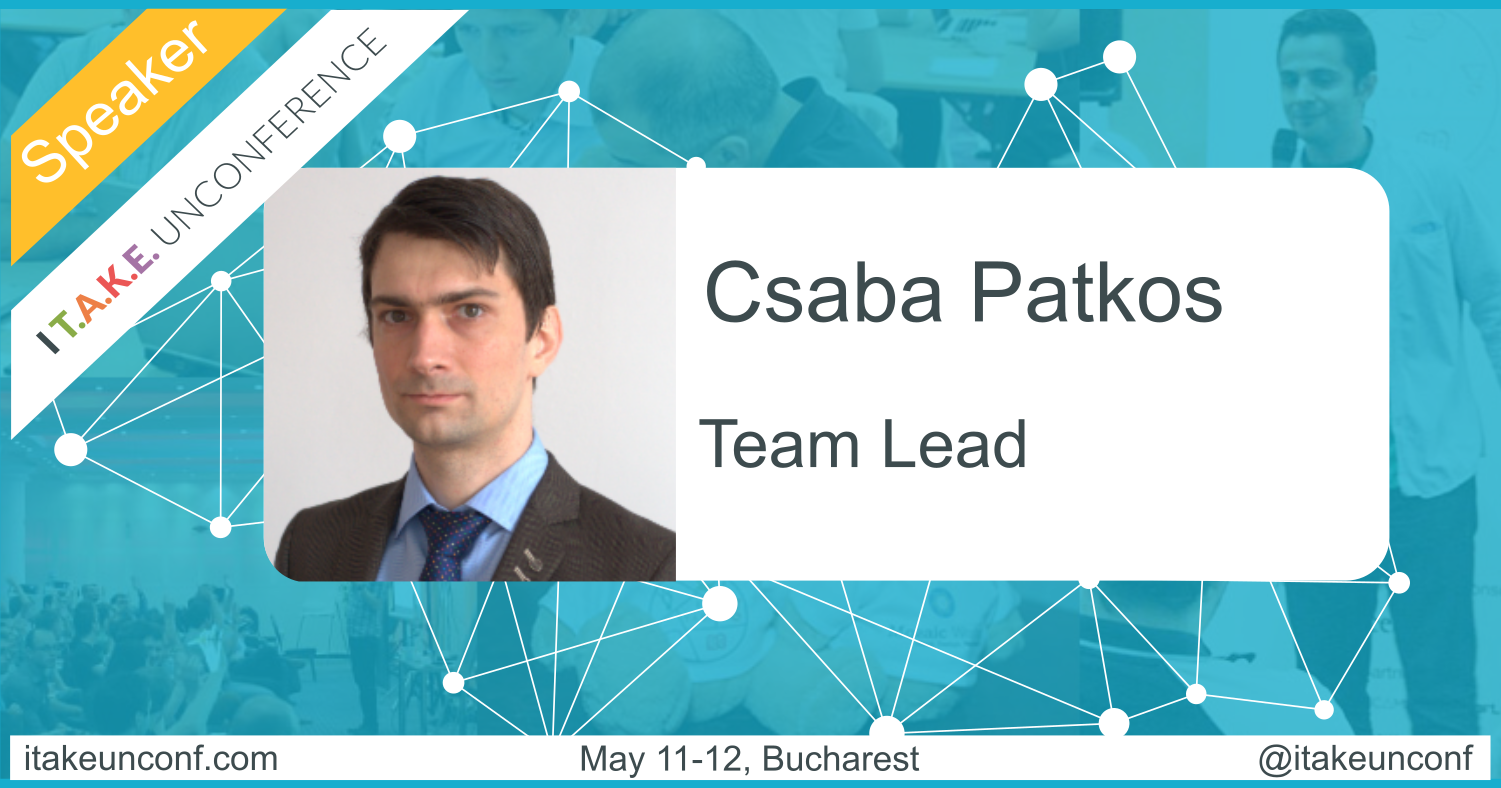
Csaba Patkos, Team Lead Syneto, is a technical practitioner with 15 years of experience in the field. Joining #itakeunconf 2017 as speaker, he will share more in his talk about his experience of growing up as a team leader, mentor, and coach for the team he works with daily.
#1. Please share with us 5 things you did that helped you grow & become the professional you are today
- Reading … I mean a lot. 40-50 books / year are doable. They can mix in a few novels / literature as well.
- Made plans and fought to achieve them. Think about where you want to be in 6 months or 1 year and define the steps you need to take to get there.
- I love programming and software engineering. I do it daily, with dedication.
- Built some useful daily habits that are helping me to get better. For example listen to audio books when driving, daily reading, daily plan of work, etc.
- Talked to the people I admire and I used these talks as sources of inspiration. So, don’t be afraid to approach your professional idols, they are people just like you.
#2. What challenges will the participants find solutions to during your session at I T.A.K.E Unconference 2017?
√ Some people just won’t listen to you.
√ Some people just want to force their ideas on you.
√ Some people don’t care about the topic, they just pick fights with you.
√ Some people think you don’t care, even though you really do.
√ Other communication issues.
#3. Recommend for the participants 3 sources you find inspiration from and would help them better understand you
Want to join Csaba and ~300 software crafters from around Europe?
Register now for I T.A.K.E Unconference 2017!