The week to celebrate #famousITwomen brings you the chance to win an invitation to The Europe Software Craftsmanship event dedicated to Software Architecture, Software Design and Technical Strategy – I T.A.K.E. Unconference 2015.
Most of our followers have probably found out more about the roots of technology from the #famousITwomen stories here on the blog. As a gift to you, here’s an invitation that you might enjoy – thanks for following us. There’s how you can get it:
Leave a comment hereby saying Who’s your favorite famous IT woman. Or share a link where to read more about her. She can be Ada Lovelace, or Barbara Liskov, or any of the women who left stamps on tech history, anyone that might have inspired you. Use the #famousITwomen hashtag.
You can enter the competition until Mon 16th of March. The one who has most likes for his/her comment will be rewarded on Wed 18th of March. If you are a software craftsman we encourage you to comment too and win the invitation for her.
Looking forward to see you at I T.A.K.E. Unconference 2015 in May!
P.S. Keep an eye on the blog for amazing stories about #famousITwomen who’ve made breakthrough contributions along the history www.itakeunconf.com
Find more about I T.A.K.E. Unconference.
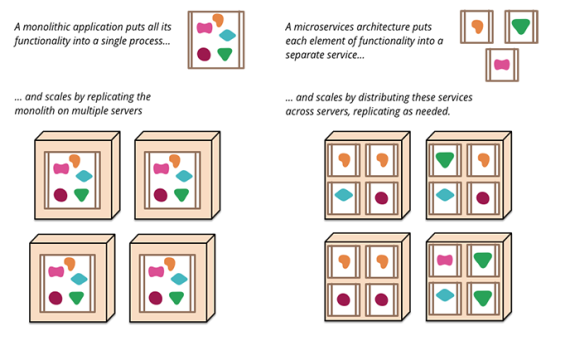
Microservices Architecture by James Lewis and Martin Fowler
James Lewis, keynote at I T.A.K.E. Unconference 2015, has a valuable contribution on Microservices Architecture.
Sneak peak:
“In short, the microservice architectural style [1] is an approach to developing a single application as a suite of small services, each running in its own process and communicating with lightweight mechanisms, often an HTTP resource API. These services are built around business capabilities and independently deployable by fully automated deployment machinery. There is a bare minimum of centralized management of these services, which may be written in different programming languages and use different data storage technologies.”
If interested in this topic, read the full contribution, jointly created with Martin Fowler.
Join I T.A.K.E. Unconference 2015 to hear more in his talk: Microservices – Systems That Are #neverdone.
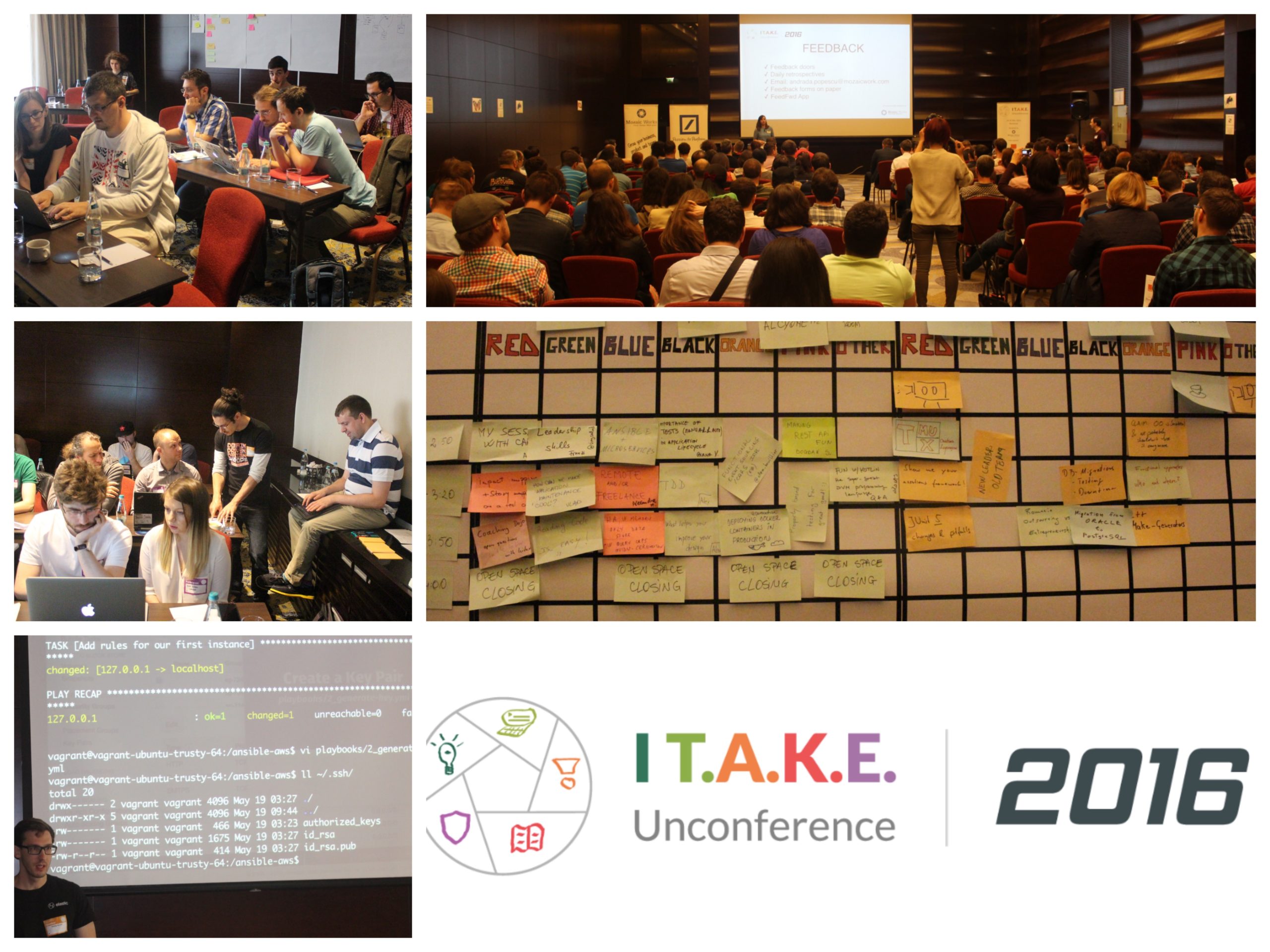
I T.A.K.E Unconference 2016 – IInd day videos & slides
And…it’s a wrap: 2 days of intense & complex program, almost 300 participants, +30 sessions & +30 speakers. During the 2nd day of the event, 16 speakers from 11 countries shared their knowledge on Microservices, Autotesting & Design, Quality Practices, Architecture & Technical Leadership.
Watch the videos from the event here. Find below the presentations from day 2. The slides from day 1 are here.
Continous Deployment
Andrey Adamovich – Patterns for infrastructure as a code
Tugberk Ugurlu – Zero Downtime Deployment Golden Rules & Docker Changes the Way You Develop and Release Your Scalable Solutions
Thierry de Pauw – Continuous Delivery is more than just Tooling_Its a Culture
Thomas Sundberg – Definition of Done – Working software in production
Autotesting & Design
Thomas Sundberg – How deep are your tests
Franziska Sauerwein – Introduction to Outside in Test Driven Development (London School)
Alexandra Marin – Error-proof your mobile app
Ricardo Mendez – Flexibility Through Immutability
Quality Practices
Houssam Fakih – Never Develop Alone – always with a partner
Andrey Adamovich – Visualising Codebases
Architecture
Milen Dyankov – Microservices and Modularity
Clement Bouillier, Jean Hellou, Florent Pellet & Emilien Pecoul – Workshop around CQRS & Event sourcing
Technical Leadership
Hugo Messer – How to successfully manage remote teams
Flavius Stef – Is management dead
A few thoughts from the participants
- Very glad I attended, well worth the trip from UK
- It was a very well organised event. I really enjoyed it, the speakers have been inspiring and well prepared 🙂
- It was a pleasant learning environment – I hope you will continue to bring high-quality speakers in the event

Meet the speakers – Part I. Registration on!
Live coding. Architecture & Software Design. Quality practices. DevOps. Technical Leadership. And more…
These are just a few of the topics you will hear about at the 4th edition of I T.A.K.E Unconference 2016, taking place in the heart of Bucharest, 19-20 May! We are going to welcome you with an intense program and an amazing line-up of speakers!
We are honored to welcome a great number of top-notch speakers, from 16 countries, to share their stories about the latest technologies and trends. In this blog post, we will share more about 5 speakers and more will come later.
Alastair Smith, Software Developer at Redgate Software Ltd., Cambridge, UK
Test-Drive your Database (Live coding)
Learn how to make database development fun again, by applying all your favourite modern development practices to your SQL code!
Andreas Leidig, Developer, Agile Mentor at msgGillardon AG, Bretten, Deutschland
Are your Mocks mocking at you ? (Live Coding)
How reliable are your mocks when it comes to integration?

Thomas Sundberg, Developer at Think Code AB, Stockholm, Sweden
You find bugs, even with 100% test coverage. Why? Let me show you. And how to address it using TDD

Sandro Mancuso, Software Craftsman, founder of Codurance at Codurance, London, UK
Session to be announced
Clément Bouillier, Software Craftsman at DevLyon, Lyon, France
CQRS & EventSourcing (Workshop)
Learn by yourself the basics about these concepts, through coding with prepared koans
Want to challenge the current programming practices as these software craftsmen are doing? Want to experience new techniques, debate on the existing ones or even pair program in the I T.A.K.E Unconference space?
Get your Super Early Bird ticket today!
Stay tuned. We will continue publishing more about the program, speakers and the dynamic learning practices awaiting you.
Thrilled to see you in May!